
Satisfies 1 requirement
100mm 220V Electric Ventilation Air Volume Control Damper
US$6,600.00-8,000.00
1 Set(MOQ)

I have found results from10000+products and6000+suppliers aboutAir volume damper price


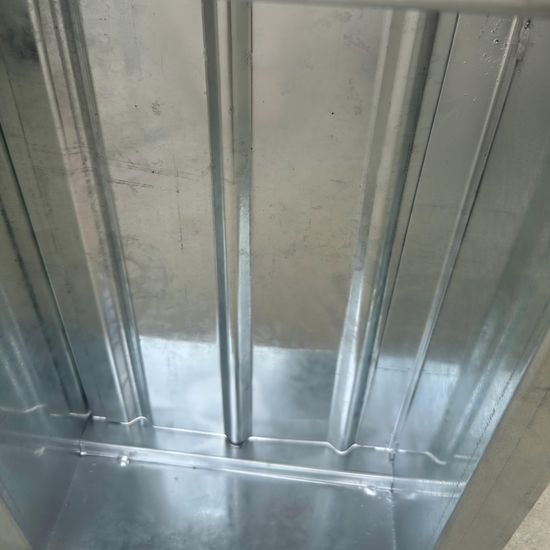


Selecting the correct material is critical for longevity. For standard HVAC systems, Galvanized Steel is the most cost-effective and common choice. However, for high-humidity environments or chemical exhaust, Stainless Steel (304 or 316) is mandatory to prevent corrosion. In specialized industrial cleanrooms or lightweight applications, Aluminum Alloy dampers are preferred due to their oxidation resistance and lower weight.
Buyers must confirm the Air Leakage Class (e.g., Class 1 or Class 2 according to EN1751) to ensure energy efficiency. Additionally, check the Blade Type (opposed blade vs. parallel blade); opposed blades are superior for precise volume control, while parallel blades are better for simple on/off functions. Ensure the Actuator Torque (measured in Nm) is sufficient to drive the damper size under maximum air pressure.
For fire safety, ensure the dampers meet UL 555 (Fire Dampers) or UL 555S (Smoke Dampers) standards if they are part of a life-safety system. For general ventilation, look for AMCA (Air Movement and Control Association) Certification, which guarantees that the performance data provided by the manufacturer is accurate and tested.
Dampers come in Manual and Motorized versions. Manual dampers are significantly cheaper and suitable for balancing systems that rarely change. Motorized dampers (electric or pneumatic) are more expensive but essential for automated Building Management Systems (BMS). When sourcing from Made-in-China.com, specify the required voltage (24V or 220V) and signal type (on/off vs. modulating 0-10V) to get accurate pricing.
Request a Pre-Shipment Inspection (PSI) to verify the dimensions, material thickness (gauge), and motorized operation. Since dampers are often bulky, ensure the supplier uses reinforced plywood crates rather than simple cartons to prevent frame warping during sea freight. Always use Secure Payment services on Made-in-China.com to protect your funds until the bill of lading is issued.
Focus on the Total Cost of Ownership (TCO). Negotiate for tiered pricing where the unit cost drops by 10-20% for full container loads (FCL). Ask the supplier if they can provide OEM branding at no extra cost for large orders. Additionally, check if the supplier can consolidate other HVAC accessories (like grilles or diffusers) to reduce overall shipping costs.
Be aware of Anti-Dumping Duties that some countries impose on specific steel products. Ensure the supplier provides a detailed HS Code (typically 7326 or 8481) to accurately calculate import tariffs. For shipping, FOB (Free On Board) is recommended for experienced buyers to maintain control over freight costs, while DDP (Delivered Duty Paid) is better for those who want a hassle-free door-to-door delivery.