Satisfies 1 requirement
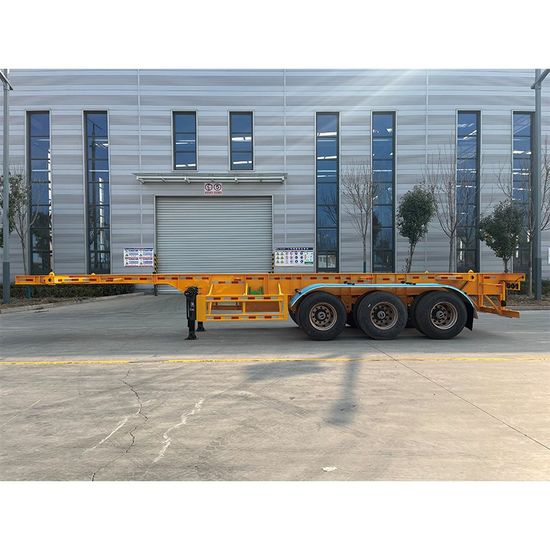
Vehicle Master Transport Container 3 Axles 40FT Skeleton Semi Trailer Skeletal Chassis Semi Trailer
US$4,000.00-8,000.00
1 Set/Sets(MOQ)

I have found results from10000+products and6000+suppliers aboutAxle skeletal trailer


Selecting a skeletal trailer requires matching the axle configuration to your local weight regulations and cargo types. For standard 20ft or 40ft containers, a 2-axle or 3-axle design is common. Ensure the main beam is constructed from high-strength Q345B steel using automatic submerged arc welding to prevent structural fatigue. You must also verify the twist lock quality, as these are the primary safety components securing the container to the chassis.
Buyers should prioritize trailers that meet ISO 1161 standards for container securing points. Key specs include axle load capacity (typically 13T to 16T per axle), braking systems (preferably WABCO ABS or EBS for international safety compliance), and polyurethane paint for superior corrosion resistance. For the North American market, ensure DOT certification, while for the EU, look for CE marking and ADR compliance if transporting hazardous materials.
The suspension is critical for road stability. Choose between mechanical leaf spring suspension for cost-effectiveness and heavy loads, or air suspension for transporting fragile cargo and reducing tire wear. Check if the supplier uses reputable axle brands like FUWA or BPW, which offer global spare parts availability. Reinforced suspension hangers and high-quality braking chambers are essential for long-term operational safety in rugged terrains.
Professional suppliers on Made-in-China.com should offer customization such as extendable chassis for varying container lengths (20ft, 40ft, 45ft), gooseneck designs to lower the center of gravity, and self-steering axles for better maneuverability in tight urban ports. Additionally, request LED lighting systems and anti-skid platforms to enhance worker safety during loading and unloading operations.
The biggest risks include structural damage during maritime shipping and non-compliance with local road regulations. To mitigate these, request third-party inspections (such as SGS or BV) before the final payment. Ensure the supplier provides a detailed VIN (Vehicle Identification Number) and a Certificate of Origin to facilitate smooth customs clearance and vehicle registration in your country.
Skeletal trailers are bulky, making freight expensive. Use SKD (Semi-Knocked Down) shipping where multiple trailers are stacked (usually 3 units per stack) to fit into a 40ft High Cube container or via Ro-Ro (Roll-on/Roll-off) vessels. This strategy can reduce sea freight costs by up to 40%. Always confirm the Incoterms (FOB vs. CIF) to understand exactly where your liability begins.
Focus on the Total Cost of Ownership (TCO) rather than just the initial purchase price. Negotiate for extended warranties on the main beam (typically 5-10 years) and the inclusion of wear-and-tear spare parts (like brake linings and air bags) in the initial order. For bulk purchases, leverage the competitive landscape on Made-in-China.com to secure volume discounts of 5-10% and prioritized production lead times.
Always use secure payment channels and consider using Trade Assurance services provided by reputable platforms like Made-in-China.com. Avoid full upfront payments; a standard structure is 30% deposit and 70% balance against the Bill of Lading (B/L) copy after the goods have passed a pre-shipment inspection. This ensures the supplier is held accountable for the quality and delivery timeline.