
Satisfies 1 requirement
Double Side Door Enclosed Box Cargo Semi Trailer
US$13,000.00-18,000.00
1 Piece(MOQ)

I have found results from20000+products and7000+suppliers aboutBox enclosed trailer


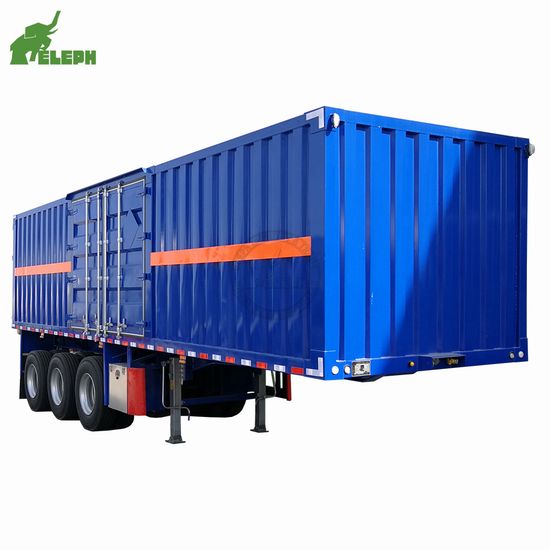


When sourcing box enclosed trailers, prioritize the chassis and frame construction. Look for hot-dipped galvanized steel frames to ensure maximum corrosion resistance, especially for coastal or snowy regions. The payload capacity (GVWR) must align with your cargo needs; ensure the axle rating (e.g., Dexter or AL-KO brands) matches the intended weight. For the exterior, screwless aluminum skin (0.030" thickness or higher) provides a professional look and prevents leaks, while one-piece aluminum roofing is superior to seamed roofs for long-term water resistance.
Compliance is critical for road legality. For the US market, trailers must meet DOT (Department of Transportation) standards and have a valid 17-digit VIN (Vehicle Identification Number). For the European market, CE marking and e-Mark certification for lighting and braking systems are mandatory. Ensure the supplier provides a Certificate of Conformity (CoC) or MSO (Manufacturer's Statement of Origin) to facilitate vehicle registration in the destination country.
Focus on the braking system; for trailers with a GVWR over 3,500 lbs, electric or hydraulic surge brakes are essential. Inspect the welding quality—robotic welding often offers higher consistency than manual welding. For safety, verify that all LED lighting meets SAE/DOT or ECE standards. Additionally, check the floor material; 3/4" pressure-treated plywood or aluminum tread plate (ATP) is recommended for heavy-duty usage to prevent rot and structural failure.
A high-quality manufacturer should provide OEM/ODM services, including adjustable tie-down systems (E-track or D-rings), side door configurations, and ramp door vs. barn door options. For specialized industries, inquire about climate control (insulation and HVAC), built-in cabinetry, and internal lighting packages. The ability to provide CAD drawings for approval before production is a hallmark of a reliable professional supplier.
Always mandate a Pre-Shipment Inspection (PSI) by a third-party agency like SGS or TÜV. Specifically, request a waterproof test (hose test) to ensure the enclosure is sealed and a load-bearing test for the ramp and axles. Using Made-in-China.com's Secured Trading services can provide an extra layer of payment protection, ensuring funds are only released upon confirmation of shipping documents and inspection reports.
Trailers are bulky, so shipping costs can be high. To optimize, consider SKD (Semi-Knocked Down) kits where the wheels and tongues are removed to fit more units into a 40ft HC container. Alternatively, for fully assembled units, Ro-Ro (Roll-on/Roll-off) shipping is often safer and more efficient than containerization, though it depends on the port facilities in your country. Always clarify Incoterms (FOB vs. CIF) to understand where your liability for insurance and freight begins.
Negotiate based on Total Cost of Ownership (TCO) rather than just the unit price. Ask for volume-based discounts (e.g., 5-10% off for 10+ units) and request a spare parts package (tires, bearings, and light covers) to be included in the initial deal. Emphasize a long-term partnership to secure better lead times and prioritized technical support. Ensure the warranty terms (ideally 2-5 years on structure) are clearly defined in the sales contract.
Before ordering, confirm the hitch ball size (typically 2" or 2-5/16") and the wiring plug standard (7-way flat vs. 4-way round) used in your region. Verify that the coupler height is compatible with standard towing vehicles in your market. Failure to align these technical details can lead to significant modification costs upon arrival.