
Satisfies 1 requirement
2/3/4 Axle Heavy Duty 40FT Flatbed/Plateform Utility/Cargo/Container Chassis Truck Semi Trailer with Twist Lock
US$9,000.00-15,000.00
1 set(MOQ)

I have found results from100000+products and80000+suppliers aboutContainer chassis trailer


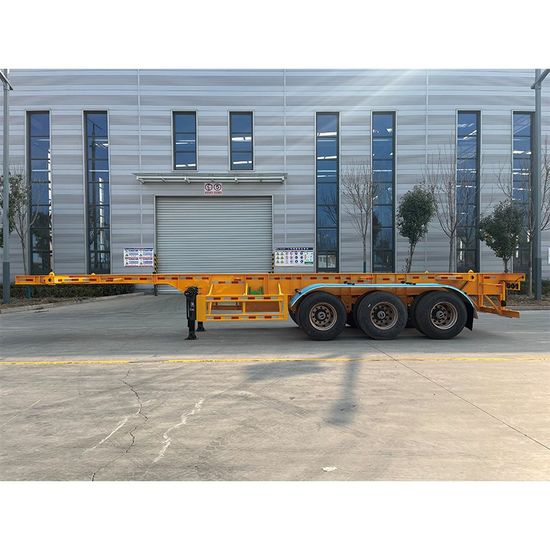


When evaluating a container chassis, the main beam material is paramount; look for high-strength Q345B or T700 steel to ensure structural integrity under heavy loads. Pay close attention to the axle brand and capacity, with FUWA or BPW axles (13-16 tons) being the industry standard for durability. Additionally, verify the twist lock quality, ensuring they are ISO-standard retractable locks for securing 20ft, 40ft, or 45ft containers safely.
For cross-border procurement, ensure the manufacturer provides ISO 9001 certification and World Manufacturer Identifier (WMI) codes. Depending on your target market, the trailer must meet specific regulations such as DOT (Department of Transportation) for the US, ADR for Europe, or GCC/SASO for the Middle East. Always request braking system certificates, specifically for WABCO ABS or EBS systems, which are critical for road safety compliance.
The choice depends on your logistics needs: Gooseneck chassis are ideal for lowering the center of gravity of high-cube containers; Skeleton trailers are the lightweight choice for standard port-to-yard shuttles; and Extendable (Telescopic) chassis offer maximum versatility for handling varying container lengths (20ft to 45ft). For heavy-duty mining or off-road use, prioritize reinforced suspension systems and multi-axle configurations (tri-axle or quad-axle).
Since chassis are often exposed to salt air and harsh weather, prioritize suppliers using sandblasting pretreatment (SA 2.5 standard) followed by polyurethane paint or zinc-rich epoxy coating. Ask if the manufacturer utilizes electrophoresis (E-coat) technology, which provides superior rust resistance compared to traditional spray painting, significantly extending the equipment's lifespan.
To optimize freight, use the 'SKD' (Semi-Knocked Down) or stacking method, where 2-3 chassis are stacked and shipped via 40HQ containers or Bulk Cargo ships. This can reduce shipping costs by up to 40%. Ensure the supplier provides a detailed assembly manual and video support if choosing the knocked-down option.
Always conduct business through reputable platforms like Made-in-China.com, utilizing their Audit Reports and 'Diamond Member' status to vet factory legitimacy. Use Escrow-based payment terms or Letters of Credit (L/C) for large orders to ensure funds are only released upon proof of shipment and passing third-party inspections (such as SGS or BV).
Negotiate a 'Wear-and-Tear Package' to be included in the initial shipment, containing essential items like brake linings, air bags, and light bulbs. Ensure the contract specifies a main beam warranty of at least 5-10 years and a clear protocol for remote technical support or local repair cost compensation.
Confirm that the supplier provides a Certificate of Origin (CO) to benefit from potential Free Trade Agreement (FTA) tariff reductions. Ensure the VIN (Vehicle Identification Number) is correctly engraved and matches all shipping documents, including the Bill of Lading and Commercial Invoice, to avoid costly delays at the port of entry.