
Satisfies 1 requirement
Sustainable Housing Alternative: Cost-Effective Modular Design Built From Recycled Shipping Containers for Living or Working Spaces
US$1,985.00-2,164.00
6 Sets(MOQ)

I have found results from200000+products and60000+suppliers aboutContainer house design


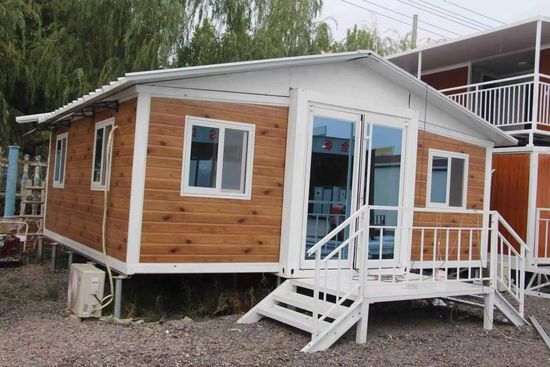


When evaluating container house designs, prioritize structural integrity and material grade. Ensure the main frame uses Q235 or Q345 galvanized steel to prevent corrosion. For insulation, Polyurethane (PU) sandwich panels or Rock Wool are essential for thermal efficiency and fire resistance. Pay close attention to the floor loading capacity, which should typically be ≥250kg/m² for residential use, and ensure the roof drainage system is integrated into the corner posts to prevent water accumulation.
Compliance is critical for legal installation. You must verify that the supplier provides CE certification for the European market or meets ASTM standards for North America. Ensure the design accounts for local wind load (up to 120km/h) and snow load requirements. Additionally, all electrical and plumbing components must be pre-installed according to the destination country's standards, such as UL (USA), AS/NZS (Australia), or CSA (Canada).
Professional suppliers on Made-in-China.com offer extensive customization. This includes modular expansion (stacking or joining units), exterior cladding (WPC or fiber cement board) to mask the industrial look, and internal layout modifications. You can also request off-grid integrations such as solar panel brackets and rainwater harvesting systems. Always request BIM or AutoCAD files during the design phase to ensure the layout meets your specific project needs.
Container houses offer a 30-50% reduction in construction time, significantly lowering labor costs. To maximize economic feasibility, focus on Flat-Pack designs, which allow for 4-6 units to be shipped in a single 40HC container, drastically reducing freight costs per unit. While the initial material cost is lower, factor in the foundation preparation and crane rental at the site to calculate the true Total Cost of Ownership (TCO).
The biggest risks include shipping damage and non-compliance with local zoning laws. To mitigate this, choose suppliers who offer Trade Assurance and conduct a pre-shipment inspection (PSI) to check for welding quality and paint thickness. Ensure the supplier provides a detailed packing list and assembly manual, as missing components can stall projects for weeks.
Focus on tiered pricing based on volume and request long-term warranty terms (typically 10-15 years on the structure). Negotiate for spare parts (extra seals, bolts, and touch-up paint) to be included at no extra cost. For large orders, suggest a staggered payment schedule linked to production milestones: 30% deposit, 40% after structural completion, and 30% after final inspection before loading.
If purchasing ISO standard shipping container conversions, they can be shipped as 'SOC' (Shipper Owned Containers). However, for detachable or flat-pack houses, ensure they are bundled securely to prevent shifting. Always clarify the Incoterms; CIF (Cost, Insurance, and Freight) is common, but DDP (Delivered Duty Paid) may be preferred if you want the supplier to handle the complex customs clearance and inland transport to your construction site.
Look for 'Audited Suppliers' on Made-in-China.com who have undergone SGS or TÜV Rheinland on-site inspections. Review their project portfolio, specifically looking for completed works in your target region. A reliable manufacturer should be able to provide material test reports (MTR) and have a dedicated after-sales technical support team available for video-call installation guidance.