
Satisfies 1 requirement
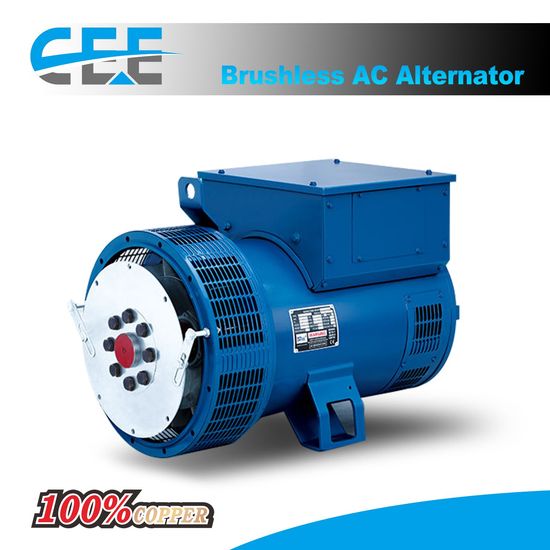
Hot Sales Brushless Synchronous Alternator Permanent Magnet Alternator for Diesel Generator
US$300.00-1,500.00
1 Box(MOQ)

I have found results from10000+products and3000+suppliers aboutPmg alternator




When selecting a PMG Alternator, you must prioritize Rated Power (kW) and Rated Speed (RPM). For renewable energy applications like wind or hydro, Low-RPM models (e.g., 100-500 RPM) are essential to eliminate the need for complex gearboxes. Ensure the Magnetic Material used is high-grade Neodymium Iron Boron (NdFeB), which offers superior magnetic flux density and thermal stability up to 120°C-150°C. Additionally, verify the Insulation Class, where Class H or Class F is preferred for high-temperature durability in continuous operation.
Compatibility hinges on the Output Voltage (AC/DC) and Phase Configuration (Single-phase vs. Three-phase). Most industrial PMGs are Three-phase AC, requiring a Bridge Rectifier or a Charge Controller to convert the output for battery charging or grid-tie inverters. You should request the Efficiency Curve from the supplier; top-tier PMGs should maintain an efficiency of 90% or higher at rated loads. Also, confirm the Shaft Dimensions and Mounting Type (Horizontal vs. Vertical) to ensure physical integration with your turbine or engine.
For entry into the European market, CE Marking and compliance with the Low Voltage Directive (LVD) 2014/35/EU are mandatory. For North American markets, look for UL (Underwriters Laboratories) or CSA certification. Since these units often contain powerful magnets, ensure the supplier provides a Magnetic Test Report for air freight safety compliance. Furthermore, ISO 9001 certification of the manufacturing facility is a baseline requirement to ensure consistent winding quality and assembly precision.
PMG Alternators are primarily used in Small-scale Wind Turbines, Micro-hydro Power Plants, and Portable Diesel/Gasoline Generators. Their brushless design makes them ideal for Off-grid Power Systems in remote areas where maintenance access is limited. They are also increasingly used in Free Energy Research and Industrial Heat Recovery Systems due to their high power density and ability to generate electricity at variable speeds.
The primary risk is Magnetic Decay or Demagnetization if low-quality magnets are used or if the unit overheats. Another risk is Shipping Damage; because PMGs are heavy and contain brittle magnets, they require Non-magnetic Shielded Packaging and robust wooden crates. To mitigate these risks, use Made-in-China.com's Secured Trading Services to ensure the product meets your technical specifications before final payment is released.
Focus on the Total Cost of Ownership (TCO) rather than just the unit price. Negotiate for a longer warranty period (2-5 years), as this reflects the supplier's confidence in their magnet quality. For bulk orders, ask for tiered pricing—discounts of 10-20% are common for orders exceeding 50 units. Additionally, request customized shaft extensions or housing colors as value-added services during the negotiation phase.
Due to the weight, Sea Freight (LCL or FCL) is the most economical method. However, you must ensure the supplier uses Vacuum Packaging or Anti-rust Oil on the shaft to prevent corrosion during long sea voyages. If shipping by air, you must comply with IATA Dangerous Goods Regulations regarding magnetized materials; ensure the supplier provides a 'Declaration of Non-Dangerous Goods' after professional magnetic shielding.
Prioritize Audited Suppliers who have undergone on-site inspections by third-party agencies like SGS or Bureau Veritas. Check their Transaction History and Buyer Reviews specifically for PMG products. Request a Factory Walkthrough via Video Call to inspect their winding machines and testing benches, ensuring they perform No-load and Full-load tests on every unit before dispatch.