
Satisfies 1 requirement
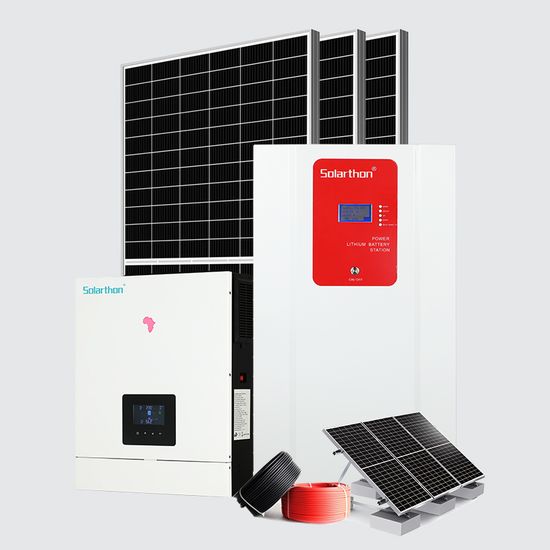
12V 3000W 3kw Power Hybrid Battery and Solar All in One Inverter for Solar Panel
US$307.00-323.00
1 Piece(MOQ)

I have found results from100000+products and50000+suppliers aboutSolar panel battery inverter




Buyers must prioritize Efficiency Ratings, aiming for a Peak Efficiency of at least 97% to minimize energy loss. It is crucial to verify the MPPT (Maximum Power Point Tracking) range to ensure compatibility with the solar panels' voltage. Additionally, for battery-integrated systems, ensure the inverter supports Bi-directional charging and has a Pure Sine Wave output to protect sensitive electronic equipment from harmonic distortion.
For the US market, products must adhere to UL 1741 and IEEE 1547 standards for grid interconnection and safety. In the EU, CE marking is mandatory, specifically compliance with the Low Voltage Directive (LVD) and Electromagnetic Compatibility (EMC) Directive. Furthermore, ensure the manufacturer provides IEC 62109-1 and IEC 62109-2 certifications, which are the global benchmarks for safety in solar power converters.
Modern hybrid inverters should be compatible with both Lead-Acid and Lithium-ion (LiFePO4) batteries. You must confirm that the inverter's Battery Management System (BMS) communication protocol (typically CAN or RS485) is pre-configured to sync with your chosen battery brand. This ensures accurate State of Charge (SoC) monitoring and prevents overcharging or deep discharge, which significantly extends battery lifespan.
For outdoor installations, the inverter must have an IP65 or IP66 ingress protection rating to ensure it is completely dust-tight and protected against powerful water jets. In coastal or high-humidity areas, request C5-level anti-corrosion protection for the enclosure and internal PCB conformal coating to prevent salt-mist damage and circuit failure.
The most significant risks include shipping damage to sensitive power electronics and non-compliance with local grid codes. To mitigate these, always insist on Sea-worthy reinforced packaging and require the supplier to provide a Grid Connection Test Report specific to your destination country. Utilizing platforms like Made-in-China.com can help you verify the supplier's Audit Reports and business legitimacy before transferring large deposits.
Standard warranties for inverters are 5 to 10 years. When negotiating, specify that the warranty must include replacement units or spare parts (like PCBA boards) stored in local warehouses if possible. For large-scale orders, negotiate a 1-2% spare unit allowance to be shipped with the bulk order to handle immediate RMAs without waiting for international shipping.
Avoid direct wire transfers to unverified accounts. Use Secured Payment services provided by reputable B2B portals like Made-in-China.com to ensure funds are only released upon proof of shipment. Additionally, hire a third-party inspection agency (like SGS or Intertek) to conduct a Pre-Shipment Inspection (PSI) to verify that the technical specs and quantities match your Proforma Invoice.
Inverters with integrated batteries are classified as Class 9 Dangerous Goods (UN3480/UN3481). You must ensure the supplier provides a valid MSDS (Material Safety Data Sheet) and UN38.3 Test Report. For bulk procurement, FOB (Free On Board) is recommended to maintain control over freight costs and insurance, while DDP (Delivered Duty Paid) may be preferred by smaller buyers to simplify customs clearance and domestic inland transportation.