
Satisfies 1 requirement
Threaded /Socket Welding Forged Ss Stainless/CS Carbon Steel High Pressure Pipe Fittings
US$1.50-5.20
1,000 Pieces(MOQ)

I have found results from90000+products and20000+suppliers aboutSs fittings


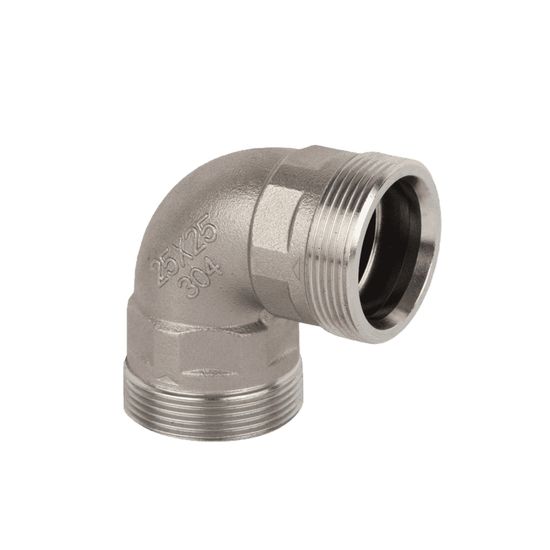

The most common grades are AISI 304 and AISI 316. Grade 304 is suitable for general use, offering excellent corrosion resistance and value. However, for marine environments, chemical processing, or high-chloride exposures, you must specify Grade 316 or 316L, as the addition of molybdenum provides superior resistance to pitting and crevice corrosion.
Depending on your region and application, you should ensure compliance with ASME/ANSI B16.9 (for butt-weld fittings) or ASME B16.11 (for forged threaded and socket-weld fittings). For European projects, look for EN 10253 standards. Always request a Material Test Report (MTR) or Mill Test Certificate (MTC) to EN 10204 3.1 to verify the chemical composition and mechanical properties.
Butt-weld fittings are preferred for permanent, high-pressure, and high-temperature pipelines due to their leak-proof nature. Threaded fittings (NPT or BSP) are ideal for low-pressure applications where easy assembly and disassembly are required. Socket-weld fittings are best for small-bore piping systems where high structural strength is necessary.
You must check the Schedule (SCH) or Class rating. For butt-weld fittings, match the schedule of the pipe (e.g., SCH 10S, 40S, or 80S). For forged fittings, common pressure classes include 2000#, 3000#, and 6000#. Using a fitting with an insufficient pressure rating can lead to catastrophic system failure and safety hazards.
Material fraud is a common risk. You should hire a third-party inspection agency (like SGS or Intertek) to perform a PMI (Positive Material Identification) test before the goods leave the factory. This ensures the nickel and chromium content matches your order specifications, preventing the substitution of 304 for 316.
Focus on Total Cost of Ownership (TCO) rather than just the unit price. Negotiate based on volume-based pricing tiers and request free samples for initial quality testing. Ensure the supplier agrees to Trade Assurance terms to protect your payment until the goods are verified against the agreed-upon quality standards.
Stainless steel is susceptible to surface contamination and scratching. Instruct the supplier to use individual plastic capping for threaded ends and seaworthy wooden crates with internal moisture barriers. For high-precision fittings, ensure they are pickled and passivated to restore the protective oxide layer before shipping to prevent rust during sea transit.
Be aware of Anti-Dumping Duties (ADD) and Countervailing Duties (CVD) that some countries impose on stainless steel pipe fittings from specific regions. Check your local Harmonized System (HS) Code (typically under 7307) against current trade regulations to calculate the accurate landed cost and avoid unexpected customs penalties.