SourcingAI

Temporary houses manufacturers

I have found results from1000+products and500+suppliers aboutTemporary houses

Sourcing guidance for Temporary Houses

What are the key technical specifications to consider when selecting temporary houses?

When sourcing temporary houses, prioritize structural integrity and material durability. Key specs include galvanized steel frame thickness (typically 2.5mm to 4.0mm) for corrosion resistance and sandwich panel density (EPS, Rock Wool, or PU). For superior fire safety and insulation, Rock Wool panels with a density of ≥100kg/m³ are recommended. Ensure the floor system uses fiber cement boards rather than simple plywood to prevent rot and ensure a load-bearing capacity of at least 250kg/m².

How do I ensure the temporary houses meet international compliance and safety standards?

Compliance varies by destination. For the EU market, CE marking and EN 1090 certification for structural steel are mandatory. For US-bound units, look for ASTM standards regarding wind load and snow load resistance. Always verify that the electrical systems (wiring, sockets, and breakers) are UL-listed or SAA-certified depending on the target country to avoid customs seizures or fire hazards. Request ISO 9001 certification from the manufacturer to ensure consistent production quality.

What usage scenarios are best suited for different types of temporary housing?

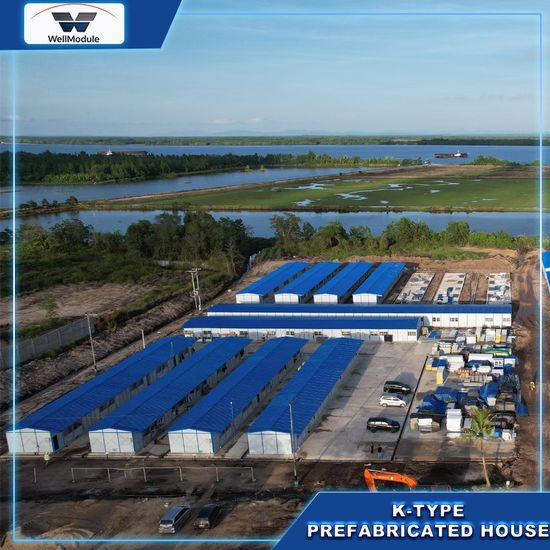
Flat-pack container houses are ideal for modular offices and labor camps due to their stackability and ease of transport. Expandable container houses are preferred for emergency disaster relief or residential cabins because they offer a larger living area (up to 37sqm) and can be deployed in under 15 minutes. For large-scale construction sites, K-type or T-type prefab houses offer the most cost-effective solution for high-density worker dormitories.

How can I evaluate the economic feasibility and ROI of temporary housing?

Calculate the Total Cost of Ownership (TCO) by including the purchase price, ocean freight (which can be optimized by fitting 4-6 flat-pack units in one 40HQ container), and onsite assembly labor. High-quality units have a lifespan of 15-20 years and high resale value or recyclability, which significantly lowers the long-term cost compared to low-end units that degrade after a single project cycle.

Cross-Border Procurement Strategy for Temporary Houses

What are the common risks in cross-border purchasing of prefab buildings?

The primary risks include structural mismatch during assembly and damage during maritime transit. To mitigate this, require the supplier to perform a pre-shipment trial assembly and provide a video report. Ensure the packaging uses steel pallets or reinforced corner protectors to prevent deformation of the sandwich panels during crane handling at ports.

How should I negotiate with suppliers on Made-in-China.com?

Focus negotiations on material transparency and spare parts. Ask for a detailed Bill of Materials (BOM) to prevent the substitution of thinner steel. Negotiate for a 1-2% inclusion of extra accessories (such as glass glue, bolts, and trim pieces) at no extra cost, as these are difficult to source locally if lost or damaged during construction.

What are the best practices for shipping and logistics to ensure transaction security?

Use Trade Assurance services on Made-in-China.com to protect your payment until the goods are verified. For shipping, FOB (Free On Board) is generally recommended for experienced buyers to maintain control over freight costs, but for first-time buyers, DDP (Delivered Duty Paid) can simplify the process by having the supplier handle complex customs clearance and 'last-mile' delivery to the construction site.

How do international trade policies affect the import of temporary houses?

Be aware of anti-dumping duties or specific import tariffs on steel structures in regions like the US or India. Check if your country offers tax exemptions for 'temporary structures' or 'disaster relief materials', which can significantly reduce your import costs. Always ensure the HS Code (typically 940690) is correctly declared on the Commercial Invoice to avoid delays.

Related queries